
Oscars are considered to be the most intelligent aquarium fish available to hobbyists. Oscars have an impeccable memory and are one of the few aquarium pets that can be trained to do tricks and individually distinguish its carer. Oscars are often available in a few different colors. The most popular being black with bright red scale colorations through its center. Other less common variations include a bright albino white with translucent red eyes, shades of pale blue and even banana yellow.
Unfortunately Oscars not community fish with the exception of being kept with other big fish in a very large tank. Before purchasing this ‘tiny’, ‘cute’ little fish in the pet store, it is important to realize that they grow very big, very fast. Oscars are often bought at the size of a few inches or less, but within a year they can grow to be closer to 8” long. At this point they will be around the size of a small dinner plate.
Oscars are very messy eaters and constantly defecate their digested food around the aquarium. This is partly due to their carnivorous nature and large appetites. To prevent poor water quality, Oscars require more maintenance than other fish. It is recommended water changes occur at least twice a week to siphon out excess waste.
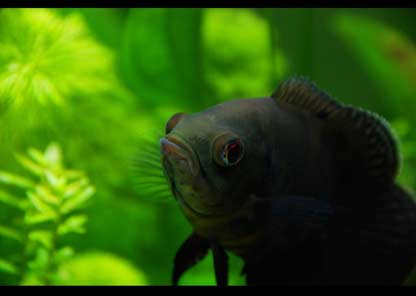
Oscars can be a lot of fun when it comes to feeding time. They are one of the few aquarium species you are able to hand feed. They will often grab the food right between your fingers! Oscars are not fussy about which foods they are given and for this reason it is important to feed them a mixed diet of commercial vitamin boosting foods and live/frozen foods.
Oscars need good water quality as do most aquarium fish species. Poor water quality will spark noticeable mood changes, discoloration and lack of appetite. It is important to pick up on these indicators early, test the water and complete a water change.
Oscars can become angry and aggressive when housed with other species of aquarium fish. It is highly recommended to keep Oscars in a species only aquarium. They do well kept in pairs or groups of 4-5+ without too much trouble. Always try to avoid housing 3 Oscars as two may become a pair, outcasting the third. It is important to house Oscars together from a young age. Introducing an Oscar to the aquarium later on can promote territorial disputes that may never be resolved and result in constant harassment within the aquarium.
Comments
0 comments
Please sign in to leave a comment.